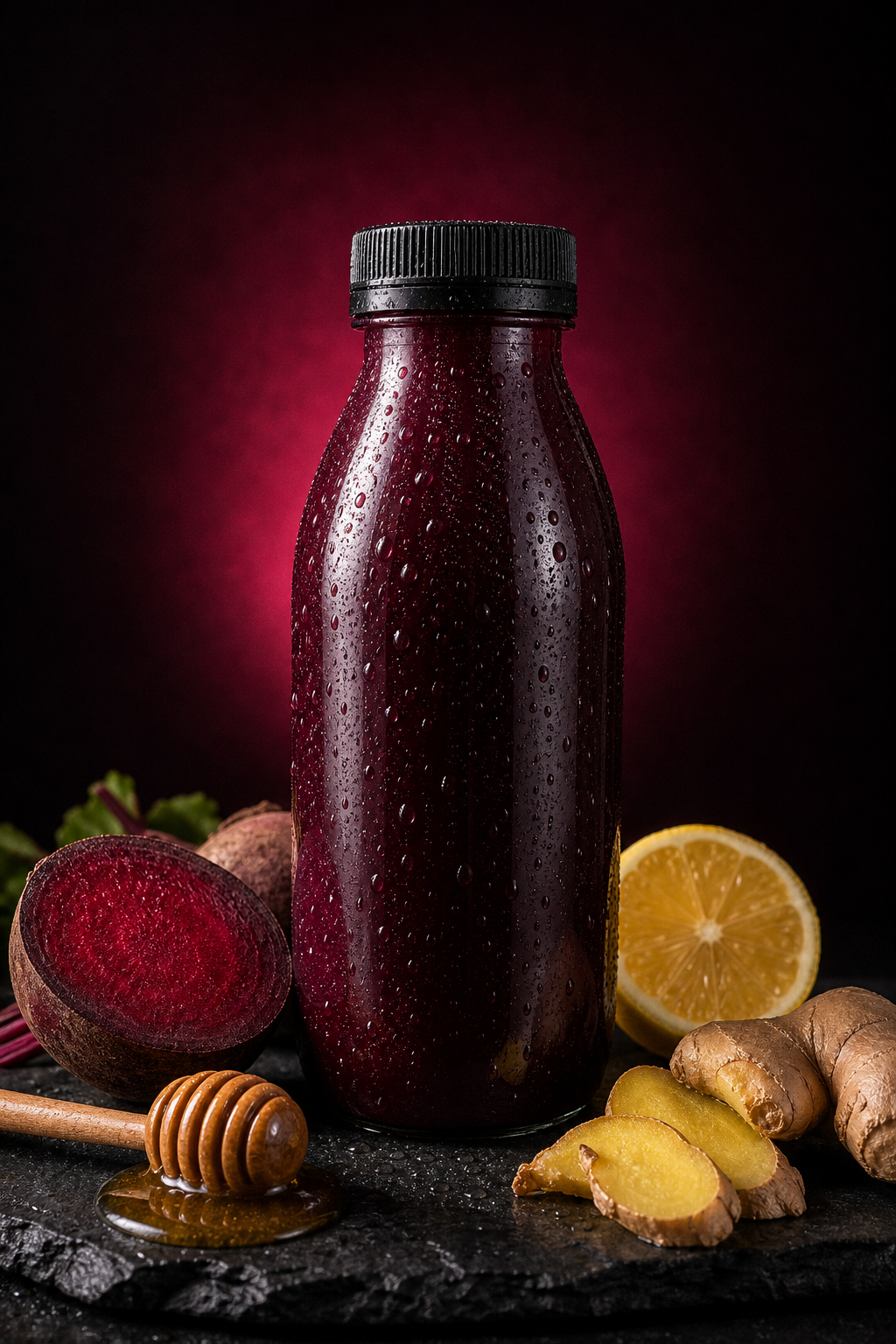
This is general food information, not medical advice.
Why Beetroot Juice Is Popular Around Training
Beetroot is naturally rich in dietary nitrates. The body can convert some of these nitrates toward nitric oxide, which is why beetroot juice is a staple in the endurance and gym market. Published effects are mixed and vary by person, dose and how they are measured.
Why Some People Feel Nothing
Plenty of people drink beetroot juice and notice very little. Common reasons in the literature include already being well-trained, inconsistent intake, or expecting one serving to override poor sleep and nutrition. That honesty matters more than a promised percentage.
How People Time It
Rather than random one-off use, people who drink beetroot around training tend to take it consistently before sessions. It is a food habit, not a guaranteed performance lever.
A Practical Approach
Consistency: many gym-goers drink a bottle daily for a stretch rather than sporadically.
Timing: commonly taken about 30 minutes to three hours before effort, since the conversion process takes time.
One genuine quirk: some research suggests strong antibacterial mouthwash may blunt nitrate conversion, since oral bacteria are involved — worth avoiding immediately beforehand.
Where People Use It Most
Beetroot juice is most popular around endurance-heavy work: repeats, conditioning intervals and longer sessions — not as a shortcut for heavy lifting or as a substitute for sleep, food and training.
For heavy strength-only sessions, benefits can still appear but are often less dramatic than in cardio-dominant work.
Keep It Real
Beetroot juice fits a consistent routine around training. It is not a shortcut for results — sleep, food and training still do the real work.