What Is Ozonated Water?
Ozone (O₃) is a molecule composed of three oxygen atoms, as opposed to the two in breathable atmospheric oxygen (O₂). It's naturally produced by ultraviolet light acting on atmospheric oxygen, and artificially generated by passing oxygen through an electrical discharge (corona discharge) or UV-C light source.
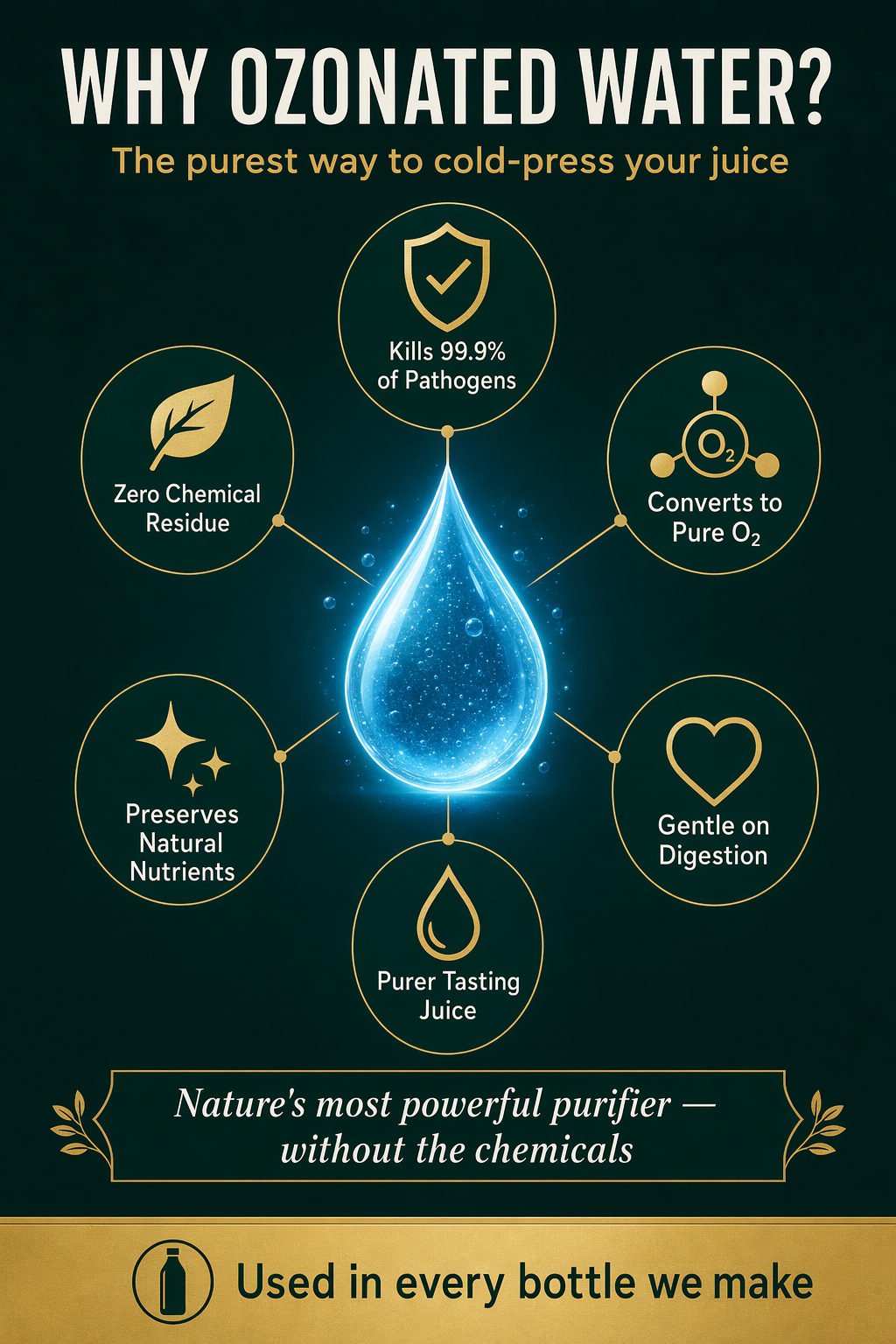
When dissolved in water, ozone creates ozonated water — a powerful oxidising agent that destroys the cell walls of bacteria, viruses, fungi, and moulds through a process called oxidative burst. The ozone molecule is inherently unstable and rapidly reverts to standard oxygen (O₂) — which means it leaves no chemical residue on the produce it cleans.
3,100× More Effective Than Chlorine
The figure is not a marketing exaggeration. The disinfection efficiency of ozone versus chlorine is well-documented across food science and water treatment literature. The mechanism explains the differential: chlorine works by a relatively slow chemical reaction with cell components, while ozone's oxidative burst is near-instantaneous and structurally more destructive to pathogen cell membranes.
The Residue Problem with Chlorine
Chlorine washes leave chlorine residue on produce. When consumed, this residue kills the beneficial bacteria your gut relies on — including the mouth bacteria that convert dietary nitrates to nitric oxide. If you're using chlorine-washed beetroot, you're undermining the very mechanism that makes beetroot valuable.
FDA GRAS Status
In 2001, the US Food and Drug Administration affirmed ozone as Generally Recognised as Safe (GRAS) for direct contact with food. This followed a petition from the Electric Power Research Institute and extensive review of the scientific literature. GRAS status means the FDA has determined that qualified experts agree on the substance's safety for the intended use.
This is not a fringe supplement designation. This is the same regulatory framework used to classify salt, citric acid, and vinegar. Ozone is as legally defined as safe as any standard food processing agent.
What It Does to Produce
When Glengala Fresh produce is washed in ozonated water before cold-pressing:
- Bacteria: Eliminated — E. coli, Salmonella, Listeria all demonstrate near-zero survival rates after ozone treatment
- Pesticide residue: Oxidised and broken down — studies show 90%+ reduction in surface pesticide presence post-ozone wash
- Moulds and fungi: Destroyed at the spore level — not just surface fungi but penetrating through porous produce surfaces
- Viruses: Inactivated — ozone is one of the most effective virucidal agents used in food processing
What it doesn't do: affect the nutritional profile of the produce. The active compounds — nitrates in beetroot, gingerol in ginger, curcumin in turmeric — are not oxidised by the ozone process. The cleaning targets the surface biology and chemical residue, not the plant's internal chemistry.
The Worm Test — Why We Started Here
Fresh celery from the farm sometimes arrives with visible worm activity — a sign of low pesticide use, but not something you want in a juice. The ozone wash eliminates it completely. The same bunch, ozone-washed before pressing: nothing survives. No worms, no bacteria, no chemical residue.
This isn't a controlled scientific study — it's a practical quality demonstration. But it led us to the literature, the FDA documentation, and eventually the infrastructure investment. Ozonated water cleaning is not optional for raw cold-pressed juice. It's the difference between a safe product and a risky one.
How It Affects the Gut Microbiome
Ozone reverts to oxygen before consumption — there is no ozone in the final juice. The cleaned produce contributes to the juice with no antimicrobial agent remaining. This is the critical difference from chlorine: by the time the juice reaches your gut, ozone treatment has left nothing behind.
The research on ozonated water and the gut microbiome points to a net positive: removing surface pathogens and pesticides from produce reduces inflammatory inputs without damaging beneficial bacteria. SOD (superoxide dismutase) levels — an antioxidant enzyme — show a 46% increase in subjects consuming ozone-treated produce in multiple studies.
The Glengala Fresh Standard
Every ingredient — celery, beetroot, ginger, turmeric, lemon, cayenne — goes through ozonated water cleaning before cold-pressing. No exceptions. This is the baseline for every product in the range.